
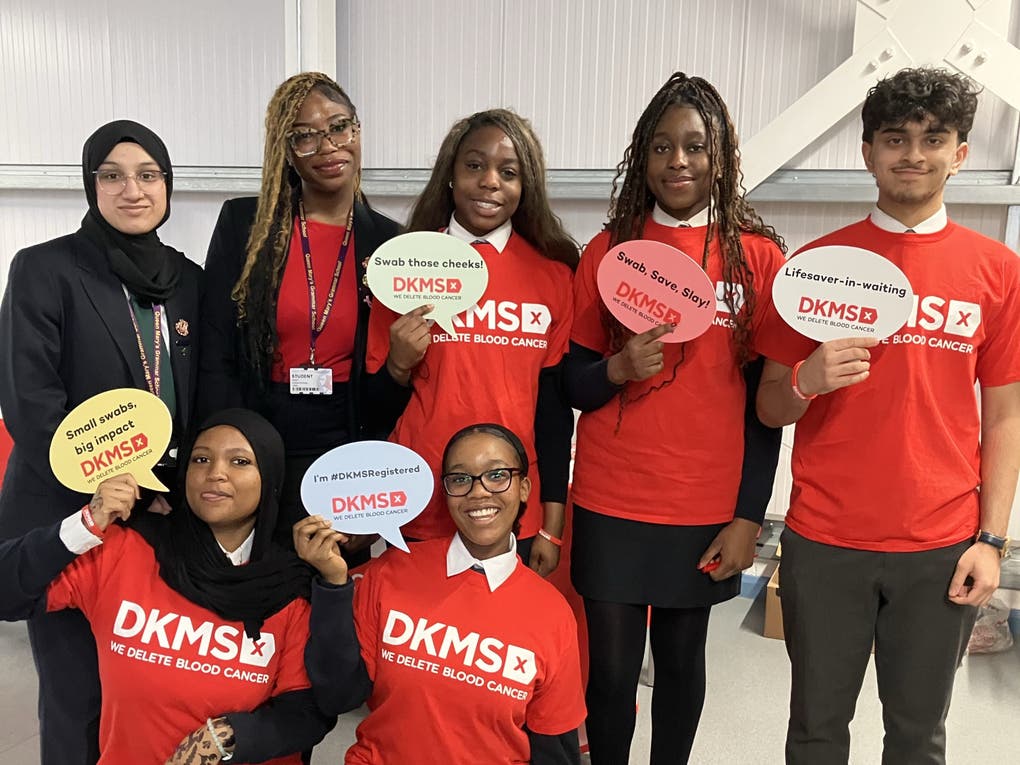
Generation Lifesaver
What is Generation Lifesaver?
Generation Lifesaver is a national initiative giving students aged 16-18 the chance to register as potential stem cell donors to help save the lives of people living with blood cancer and blood disorders.
The initiative helps schools across the country come together and give their students the chance to become lifesavers. This is your school’s opportunity to inspire your students to take action and make a real difference.
How your school can take part
Getting involved is simple, and the DKMS team will be with you every step of the way. Here’s what participating in the DKMS Schools Project includes:
An introduction to stem cell donation
We'll arrange a convenient time for a DKMS ambassador and a stem cell donor to visit your school. They'll share their personal experience in an assembly and answer students' questions about what it means to donate.
Useful resources
After the assembly, the students will receive a PDF leaflet, reminding them of what is involved in becoming a stem cell donor, along with the details of when they will be able to swab in their school.
We’ll also provide you with an email to parents, so your school can easily share details about the registration event.
Registration event
We will agree a time for the registration event, with a team of trained volunteers running the swabbing session for students aged 16+ who choose to register. We can also register staff aged 55 and under, where appropriate.
Everyone involved will receive full training and support from DKMS.
What DKMS UK provides
- We will bring all the materials required — and there’s no cost to the school.
- The registration process is quick and easy: students complete an online form on their phone, swab their cheeks, and that’s it!
- In just a few minutes, students can join the stem cell register - and take the first step toward saving someone’s life.
- This event may also provide your school with media opportunities. Our PR & Media team will be happy to support.


Why young donors matter
Young donors play a vital role in giving patients the best chance of a successful stem cell transplant. Medical evidence shows that stem cells from younger donors often lead to better transplant outcomes, which is why healthcare teams are more likely to select younger donors when a match is found.
By encouraging more 16–18-year-olds to join the register, Generation Lifesaver helps grow the pool of potential donors and increases the chances of patients finding a lifesaving match when they need it most.
Young people can also remain on the register for many years, helping more patients in the future.
300 potential lifesavers recruited at Limavady Grammar School, Northern Ireland
Limavady Grammar School recently partnered with DKMS to host a donor registration event, adding over 300 new lifesavers to the stem cell register over two days.
Killian Brolly, Head Boy, Limavady Grammar School


Mrs Moore, Head of Physical Education Department, Limavady Grammar School


18-year-old Jamie from Ireland became our 3,000th donor after joining the register through Generation Lifesaver.
It was at Strabane Academy that he met our Donor Recruitment team and joined the register back in December of 2025. But he didn't just become our 3,000th donor, he also became the first person from Generation Lifesaver to go on to donate stem cells.
Jamie's story is a powerful reminder of the impact early awareness and education about joining the stem cell register can have.
Get involved with Generation Lifesaver
If your school would like to take part, please complete the form below and we’ll be in touch.
Thank you so much to everyone who is getting involved.
Generation Lifesaver is aimed at students aged 16–18.
16-year-olds can pre-register to join the stem cell register with DKMS UK and become active donors when they turn 18.
By joining early, young people can help give more patients a second chance at life.
No. Students aged 16 and over can choose to register independently. However, because stem cell donation is an important commitment, DKMS encourages young people to discuss their decision with their parents, guardians, or family members before joining the register.
Absolutely. Teachers, school staff, parents, and other members of the school community are welcome to join the stem cell donor register with DKMS UK if they are aged 16–55 and meet the eligibility criteria.
Each new registration increases the chances of patients potentially finding their lifesaving match.
Yes. Stem cell donation is a safe and well-established procedure that takes place in a certified collection clinic.
Donor safety is always our top priority. Each donor receives medical support throughout the donation process.
Around 90% of donations take place through a simple, non-surgical procedure similar to giving blood, while the remaining 10% are done through bone marrow under a general anaesthetic.


